Skip to content
HomeWikiReincarnation

Wiki · yoga knowledge

Reincarnation

Rebirth and the cycle

Reincarnation, in Sanskrit punarjanman (पुनर्जन्म), “re-birth”, is the idea that not everything ends with death: something passes on into a new body. In yoga it is inseparable from karma: what we do determines the next birth. On this page you can find out where the idea comes from, what travels on according to the texts and what does not, why rebirth is no consolation in yoga, and how other traditions think about it.

Practise with us →

What it means

What is reincarnation?

The Latin word re-incarnatio literally means “becoming flesh again”. It names no single doctrine but a family of ideas found in many religions: something of a person outlasts death and enters a new body. Other names for it are rebirth, re-embodiment and transmigration of the soul.

In yoga the process is called punarjanman, “re-birth”, and the cycle in which it repeats itself saṁsāra, literally “wandering about”. Both terms hang on a third: karma. Because every action leaves a trace, and these traces ripen into experiences, there has to be a place where they can ripen. If one life is not enough for that, another follows.

That also says how yoga judges rebirth: it is not the goal but the problem. The cycle means being born again and again, ageing, suffering and dying. All the Indian traditions that teach it teach the way out at the same time: mokṣa, liberation.

Punarjanman“Re-birth” (punar “again”, janman “birth”). The Sanskrit term for reincarnation; also punarbhava, “re-becoming”. To the table →
Saṁsāra“Wandering about, passing through”: the cycle of birth, death and rebirth. In German we say der Saṁsāra, with the masculine article.
Jīva“The living one”: the individual, embodied soul that wanders. In Vedānta the jīva is the ātman for as long as it mistakes itself for body and mind.
Sūkṣma śarīra“Subtle body”: mind, senses, life energy and the stored impressions. At death it separates from the gross body and enters the next.

The origin

Where does the idea come from?

Rebirth is not there in India from the beginning. It arises in the centuries between the early Vedas and the Upanishads, and it arises together with the idea of karma.

Around 1500 to 1000 BCE

The early Vedas

The Ṛgveda knows no rebirth. The dead go the “way of the fathers” to Yama, the lord of the departed, and live on there (Ṛgveda 10.14). The fire carries the dead across; a return into a new body is not in view.

Around 1000 to 800 BCE

The Brāhmaṇas

A new worry surfaces in the ritual texts: punarmṛtyu, “re-death”. Even life in the beyond might end. The sacrifice is meant to protect against it. Out of this fear of dying again grows the idea of being born again.

From about 800 BCE

The Upanishads

Here the cycle is spoken out clearly for the first time and tied to action. “As one acts and as one conducts oneself, so one becomes” (Bṛhadāraṇyaka 4.4.5). The teaching of the two paths and the five fires (Chāndogya 5.3 to 10) describes how the departed reach a new womb by way of moon, rain, plant and food.

From then on rebirth belongs to the basic stock of Indian thought: Buddhism and Jainism presuppose it, the Bhagavad Gītā and the Yogasūtra build on it. The word “reincarnation”, by contrast, is young: it only entered Western usage in 1857, by way of French spiritism.

Three sources

What the texts say

Three scriptures shape how yoga understands rebirth. They do not contradict each other, but each sets its own emphasis: the image, the attitude, the mechanism.

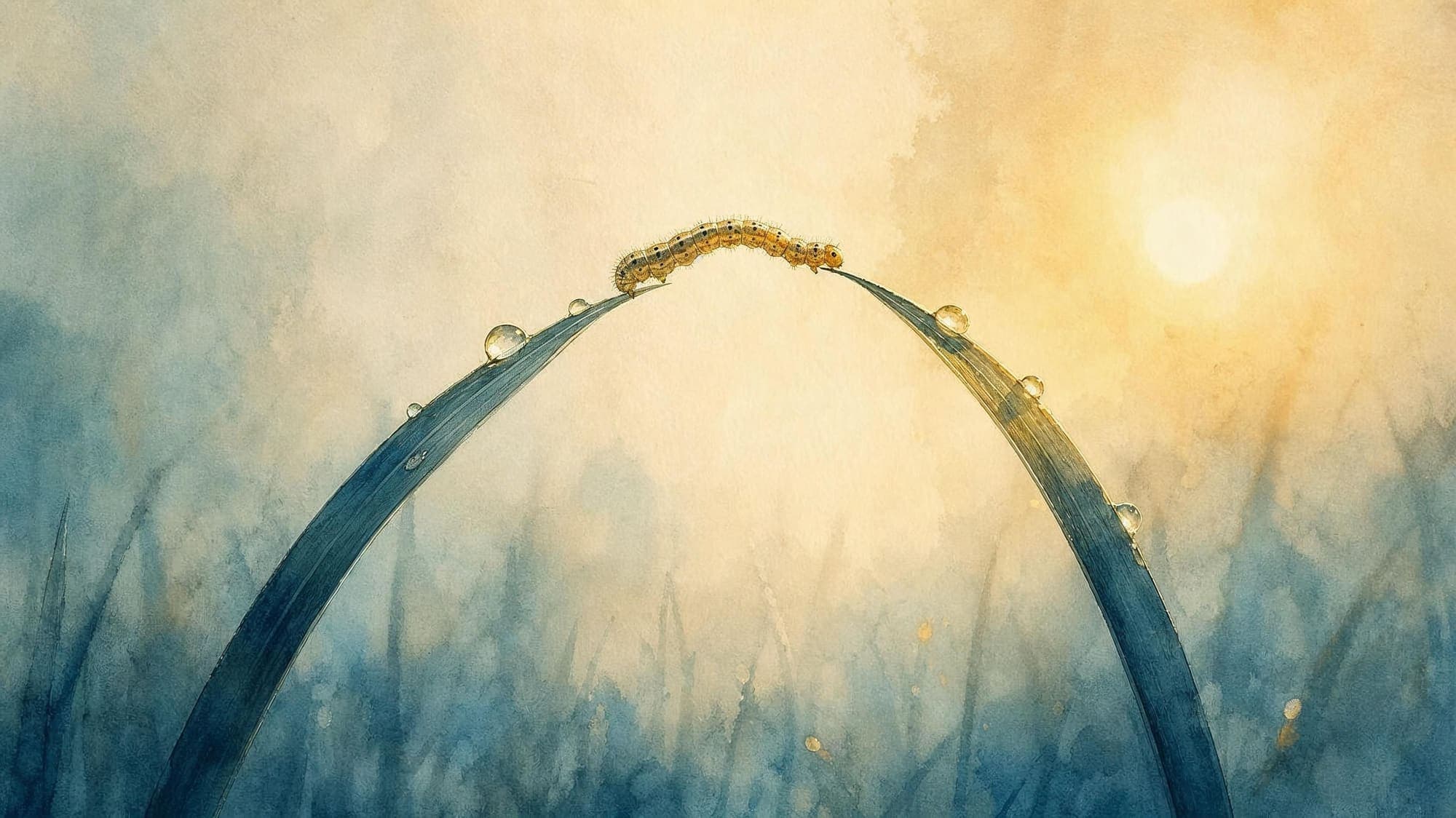
A caterpillar reaches across from the tip of one blade of grass to a second one, dewdrops in the morning light

उपनिषद्

Upanishads

The image

In brief

The Bṛhadāraṇyaka Upanishad compares the soul to a caterpillar that, at the tip of a blade of grass, takes hold of a new blade and draws itself across, and to a goldsmith who shapes a new, more beautiful form out of old gold. The Kaṭha Upanishad adds: some enter a womb, others what is unmoving, according to their deeds and their knowledge.

Passages

Bṛhadāraṇyaka 4.4.3 to 6 · Chāndogya 5.10 · Kaṭha 2.2.7

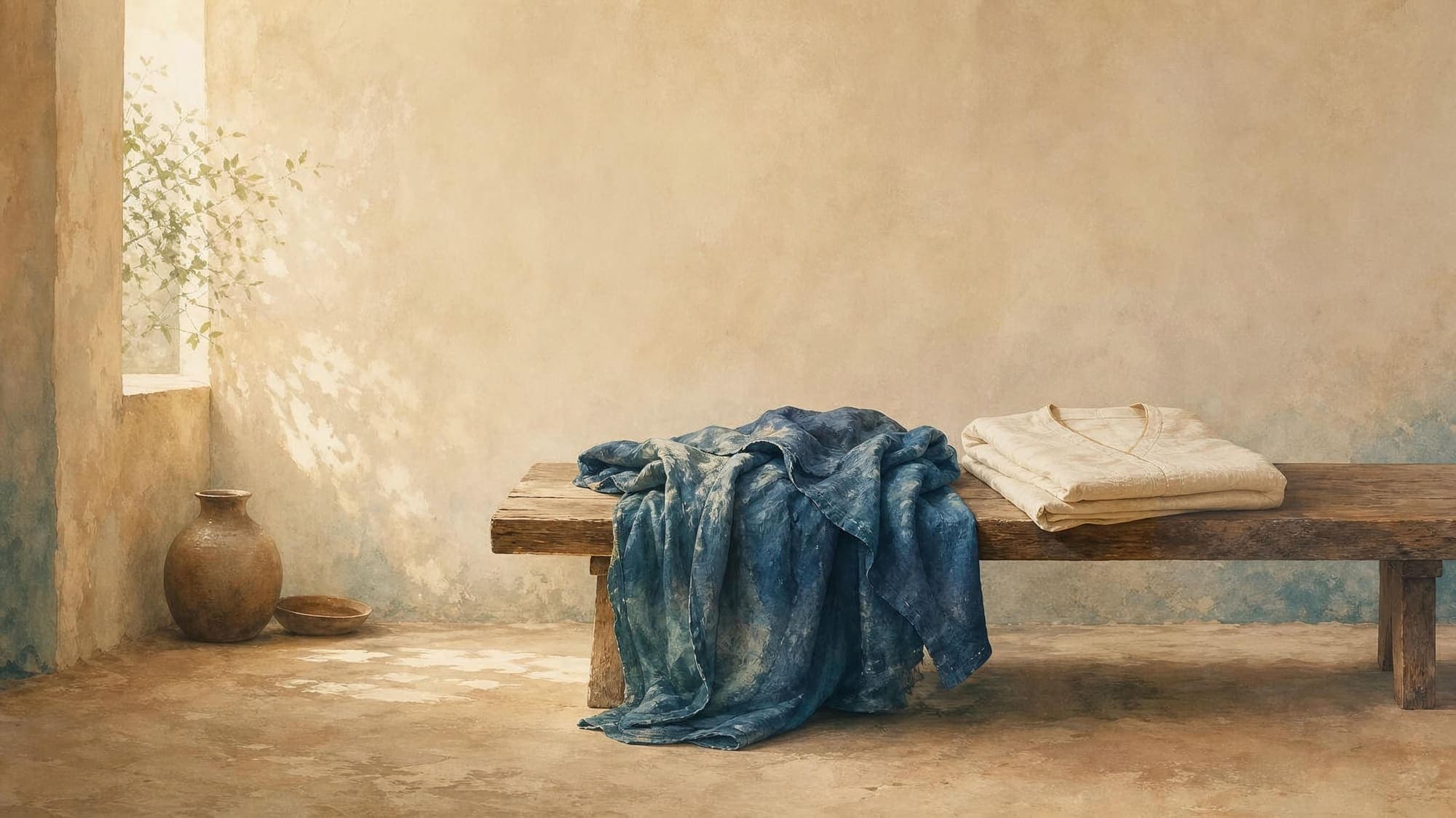
A worn blue robe lies over a wooden bench, beside it a freshly folded light one

भगवद्गीता

Bhagavad Gītā

The attitude

In brief

“As a person casts off worn-out clothes and puts on new ones, so the embodied one casts off worn-out bodies and enters new ones.” Krishna does not console Arjuna with rebirth but with what is not reborn: the self that “is never born and never dies”. Whoever reaches it does not return.

Passages

Gītā 2.20 to 22 · 2.27 · 8.6 · 8.15 to 16

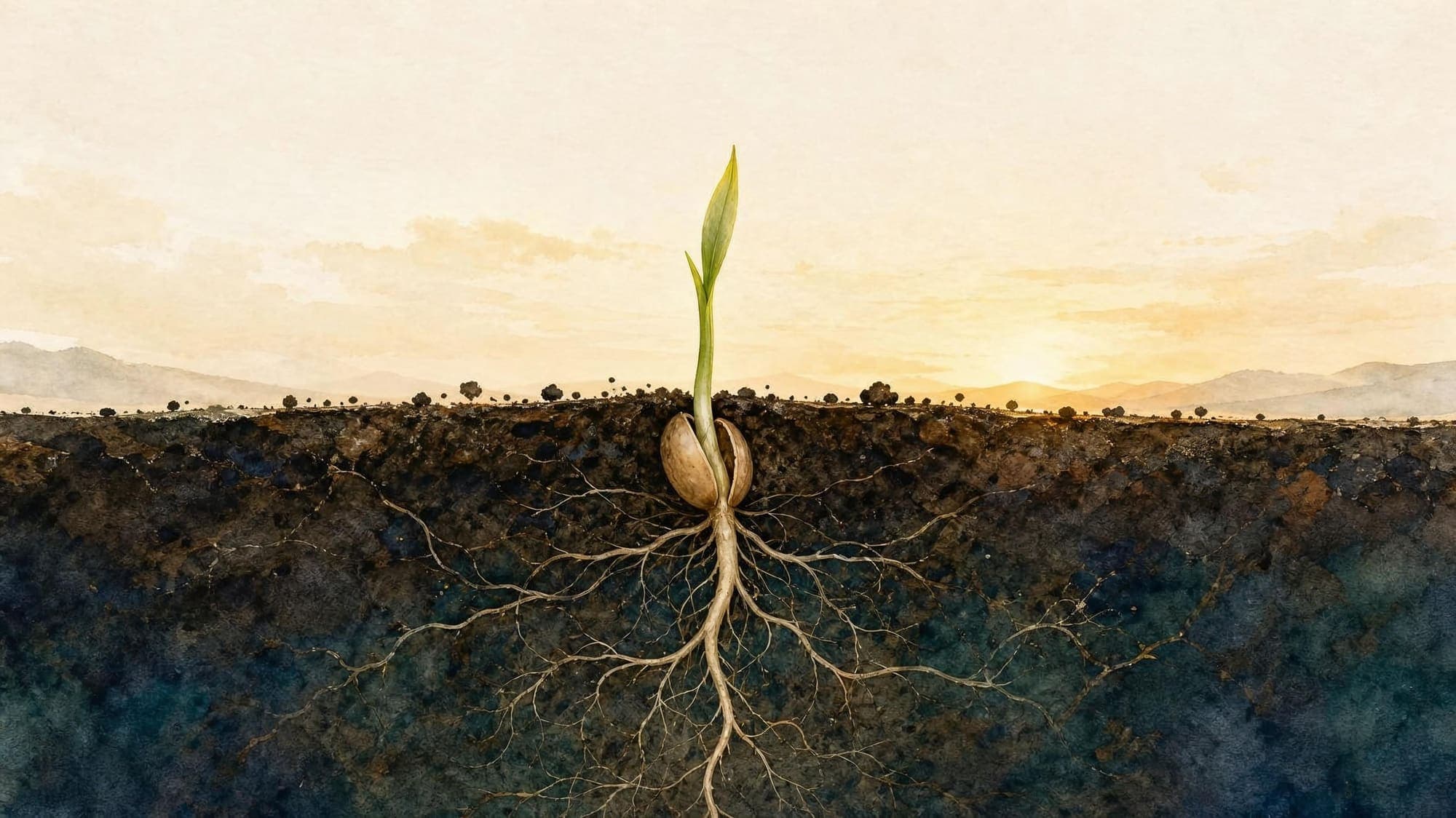
A cross-section of soil: a split seed sends roots downward and a sprout up into the morning light

योगसूत्र

Yogasūtra

The mechanism

In brief

Patañjali describes how karma becomes birth: as long as the root (the kleśas) remains, the store of karma ripens into “birth, span of life and experience”. Memory and impressions form an unbroken chain, even across birth, place and time. Whoever beholds the impressions directly recognises earlier births.

Passages

Yogasūtra 2.12 to 14 · 3.18 · 4.9

A clarification

What is actually reborn?

Not the self. That is the point where yoga parts ways with the common notion. The ātman, pure consciousness, is according to the Upanishads and the Gītā neither born nor does it die; nor does it wander. What wanders is the subtle body (sūkṣma śarīra): mind, senses, life energy and above all the stored impressions, the saṁskāras. Vedānta calls this unit the jīva, the individual soul that mistakes itself for its subtle body.

The subtle body carries inclinations, patterns and the store of karma from one gross body to the next. What it does not carry are the memories of everyday life, the name, the personality. That is why we do not remember earlier lives, and why the person who is reborn is not simply “me, just in another body”. What persists is a stream of imprints, not the I that is clinging to it right now.

For practice that means: what we practise today shapes the subtle body. Habits we lay down here come along; what we release here does not have to.

Gītā 2.22 · vāsāṁsi jīrṇāni yathā vihāya · navāni gṛhṇāti naro ’parāṇi

The connection

Karma and rebirth

Karma and rebirth are two sides of one thought. Karma is the cause: actions leave impressions that ripen into experiences. Rebirth is the consequence: because not all impressions can ripen in one life, further lives are needed. Patañjali says it in one sentence: as long as the root remains, it ripens into birth, span of life and experience (Yogasūtra 2.13).

In the image of the farmer from the Karma article: the prārabdha, the karma that has begun, is the part of the store that sets off a new birth and determines its circumstances: body, family, dispositions, span of life. It is the arrow that has left the string. What we newly create in this life, the āgāmi, flows back into the store and becomes the seed of births to come.

The way out follows from this too. Whoever sets no new impressions, and whose old impressions have been disarmed by insight, no longer has any reason for a further birth. The chain breaks not through dying but through knowing.

From action to birth

  1. Action in thought, word and deed, carried by desire or aversion, leaves an impression (saṁskāra).
  2. The impressions gather in the store of karma (karmāśaya), the sañcita, and wait to ripen.
  3. Part of it ripens into prārabdha: it sets off a birth and determines body, span of life and the basic colour of the experiences (Yogasūtra 2.13).
  4. In this life we respond to what has begun and create new karma, the āgāmi. The circle closes for as long as the kleśas remain.
  5. Insight roasts the seeds. They look as they did before, but they no longer sprout. No sprout, no new birth: mokṣa.

A misunderstanding

Rebirth as consolation?

When we speak of rebirth today, we usually mean a second chance: to live once more, learn more, catch up. Since Lessing the West has turned the idea towards hope, and that is understandable. The Indian traditions see it the other way round: the cycle is what one wants to be free of. The difference is worth a closer look.

Often heardRebirth is a second chance.

In yogaIn yoga it is the continuation of a problem. Every birth brings old age, illness and death with it. To those who reach the goal, the Gītā promises exactly this: no rebirth (8.16).

Often heardIn an earlier life I was a famous person.

In yogaMemory and personality belong to the gross body and do not come along. Only those who behold the impressions directly recognise earlier births (Yogasūtra 3.18). And most births, like most lives, are unspectacular.

Often heardWhoever lives well rises; whoever lives badly descends.

In yogaThere is no lift. Even the worlds of the gods are impermanent, “all worlds up to Brahmā's world return again” (Gītā 8.16). Karma does not judge; it works. The human birth counts as precious, not because it is high, but because only here is liberation possible. More on this ↓

Often heardYou can choose your next birth.

In yogaThe Gītā says: whatever one thinks of while dying, there one goes (8.6). But that last thought is the fruit of a whole life, not a decision in the final moment. That is why the emphasis lies on practising now.

Do you have to believe in rebirth to practise yoga? No. The instructions of yoga apply to this life: act clearly, calm the mind, distinguish the self from what changes. Whether another life stands behind it or not changes nothing about what there is to do today. Śaṅkara calls three things rare: to be born as a human, to strive for liberation and to find a teacher. Two of them lie in our hands.

A follow-up question

Human, animal or plant?

It is often said that whoever has lived badly is reborn as an animal, whoever has lived well as a human or a god. Is that true? Yes, the texts say so. But what they mean by it is something other than a list of punishments.

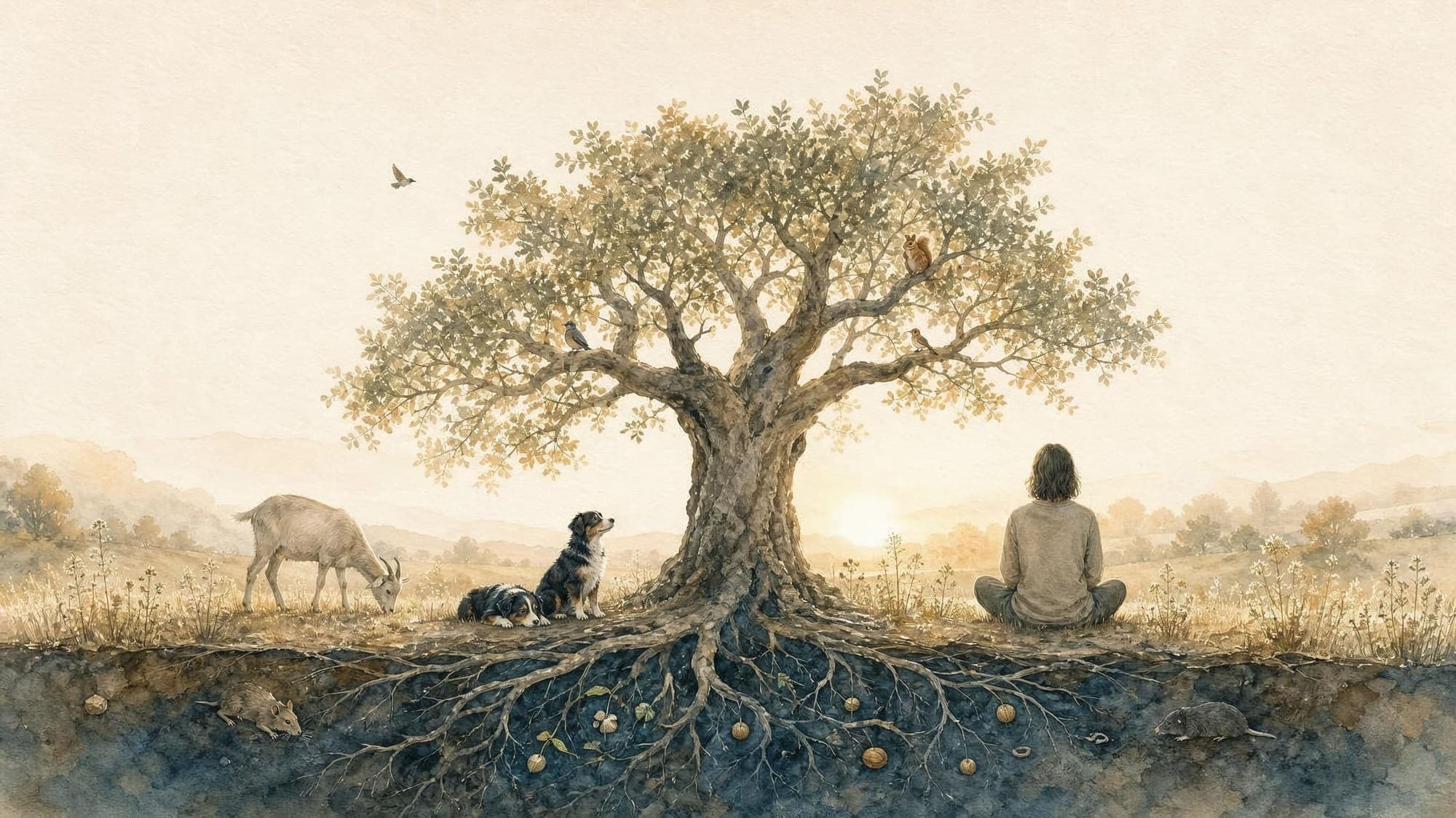
An old tree in a meadow in the morning light: mice and seeds among the roots, birds and a squirrel in the branches, two dogs and a goat at its foot, beside them a seated person with their back to the viewer
One tree, many beings: the same earth, the same light, no ranking.

Chāndogya Upanishad 5.10.7

Those whose conduct here has been pleasant enter a pleasant womb; those whose conduct has been foul, a foul one: that of a dog, a pig or an outcast.

Kaṭha Upanishad 2.2.7

Some enter a womb to be embodied; others pass into the unmoving (sthāṇu), that is, into plants and trees, according to their deeds and their knowledge.

Bhagavad Gītā 14.18 · 16.19 to 20

Those who stand in sattva go upward; those in rajas stay in the middle, the world of humans; those in tamas go downward. The cruel and the hateful are thrown “birth after birth into demonic wombs”.

Manusmṛti, chapter 12

The most detailed catalogue: whoever steals grain becomes a rat; whoever kills a Brahmin passes through the wombs of dog, pig, donkey, camel and bird. The Purāṇas count 8.4 million forms of birth (yoni).

What lies behind it?

First a clarification: a rebirth as inanimate matter, as stone or water, is unknown to the classical Indian texts. The lowest level is the “unmoving”, and that means plants, not stones. The exception is Jainism: there even earth, water, fire and wind bodies count as one-sensed living beings with a soul. To Jains a clod of earth is not dead stuff but a gathering of tiny beings. Buddhism in turn knows five or six realms, and plants are not among them.

The core of the idea is not punishment but kinship. The Gītā orders the forms of birth by the three guṇas, the basic qualities of nature: clarity (sattva), restlessness (rajas) and inertia (tamas). A mind ruled by one of these qualities finds a body that fits it. Seen this way, the animal form is no verdict from outside but the expression of what prevailed in the mind. “Whatever one thinks of while dying, there one goes” (Gītā 8.6) says the same thing from the other side.

Yoga draws from this no question about the next body, but one about the mind today. The guṇas are not labels for a later life but states we can observe right now: in the sluggishness of the morning, in the restlessness of the evening, in the clear moments in between. Yoga practises strengthening sattva. The human birth counts as precious because only in it is this practice possible.

Four things worth knowing

  1. Principle and catalogue are two different things. The philosophical texts name only the principle: the form of birth (jāti) is a fruit of karma (Yogasūtra 2.13). Which deed leads to which form, they do not say.
  2. The catalogues are legal texts. The Manusmṛti is a Dharmaśāstra, a treatise on law and conduct. Its drastic images are meant to urge people to keep the rules. They are pedagogy, not metaphysics.
  3. The teaching has a dark side. The same logic served to present the caste order as deserved; the Chāndogya already calls birth as a Brahmin or a warrior “pleasant”. That belongs to the history of the idea and should not be blanked out. Yoga itself knows no such ranking: before the kleśas, all are equal.
  4. Greece thought the same way. In the Phaedo Plato has gluttons become donkeys, the violent wolves and hawks, upright citizens bees and ants (81e to 82b). The idea that character chooses its body is not only Indian.

Beyond yoga

Reincarnation in relation to other traditions

Rebirth is no peculiarly Indian doctrine. It is found in Greek antiquity, in Jewish mysticism, at the margins of Islam and in the modern West, each with its own reasoning. And the great religions that reject it have reasons for doing so that are worth knowing. Choose on the left what interests you.

Buddhism

Rebirth without a soul

Buddhism shares with yoga the cycle (saṁsāra) and the goal of leaving it. The Buddha himself is said to have beheld his earlier lives in the night of his awakening (Majjhima Nikāya 36). The decisive difference lies in what is reborn: Buddhism teaches non-self (anattā). There is no ātman that wanders from body to body.

What goes on is a stream of conditioned processes: intentions, impressions, moments of consciousness. The image for it comes from the Milindapañha: one flame lights a second candle. The second flame is not the same as the first, but neither is it independent of it. In the same way the newborn is neither the same as the deceased nor someone entirely different.

The tradition knows six realms of existence, which the wheel of life (bhavacakra) shows:

  • Gods and demigods
  • Humans
  • Animals
  • Hungry ghosts (preta)
  • Hell beings

None of these realms lasts, not even the heavenly one. The human birth counts as especially precious, because only here is awakening possible. A parable of the Buddha compares its rarity to a blind turtle that surfaces once every hundred years and, in doing so, puts its head through a single yoke drifting on the ocean (Majjhima Nikāya 129). Tibetan Buddhism describes in the Bardo Thödol the intermediate states between death and new birth, traditionally 49 days. The goal, nirvāṇa, is the end of the cycle.

The way

What does that mean for today?

The Gītā begins with a person who stands before death and does not know how to go on. Krishna's answer is no promise of a next life to put him off with, but a shift of the gaze: “The wise grieve neither for the living nor for the dead” (2.11), because what they are is neither born nor does it die. Seen this way, rebirth is not a promise but a description of what happens for as long as we take ourselves to be body and role.

For everyday life the idea carries even without metaphysics: taking impermanence seriously, understanding habits as seed, seeing farewells and new beginnings as part of a rhythm rather than as a disturbance. Every yoga class practises that in miniature. It begins, unfolds and ends in the stillness of śavāsana, the “corpse pose”, from which we consciously rise again.

What we release here does not have to come along. That is the practical side of the teaching, and it holds regardless of what one thinks about the next life.
With us in practice

  1. Every class on the mat ends in śavāsana: letting go of what was and consciously beginning anew. A cycle in miniature.
  2. In pranayama we watch how every breath comes, unfolds and goes. Whoever learns to bear the end of the exhalation practises impermanence without fear.
  3. In singing the sound carries beyond the single word. Many mantras address what is not born and does not die.
  4. In coaching we look at transitions: what is ending in your life right now, what is beginning, and which patterns are you taking along without meaning to?
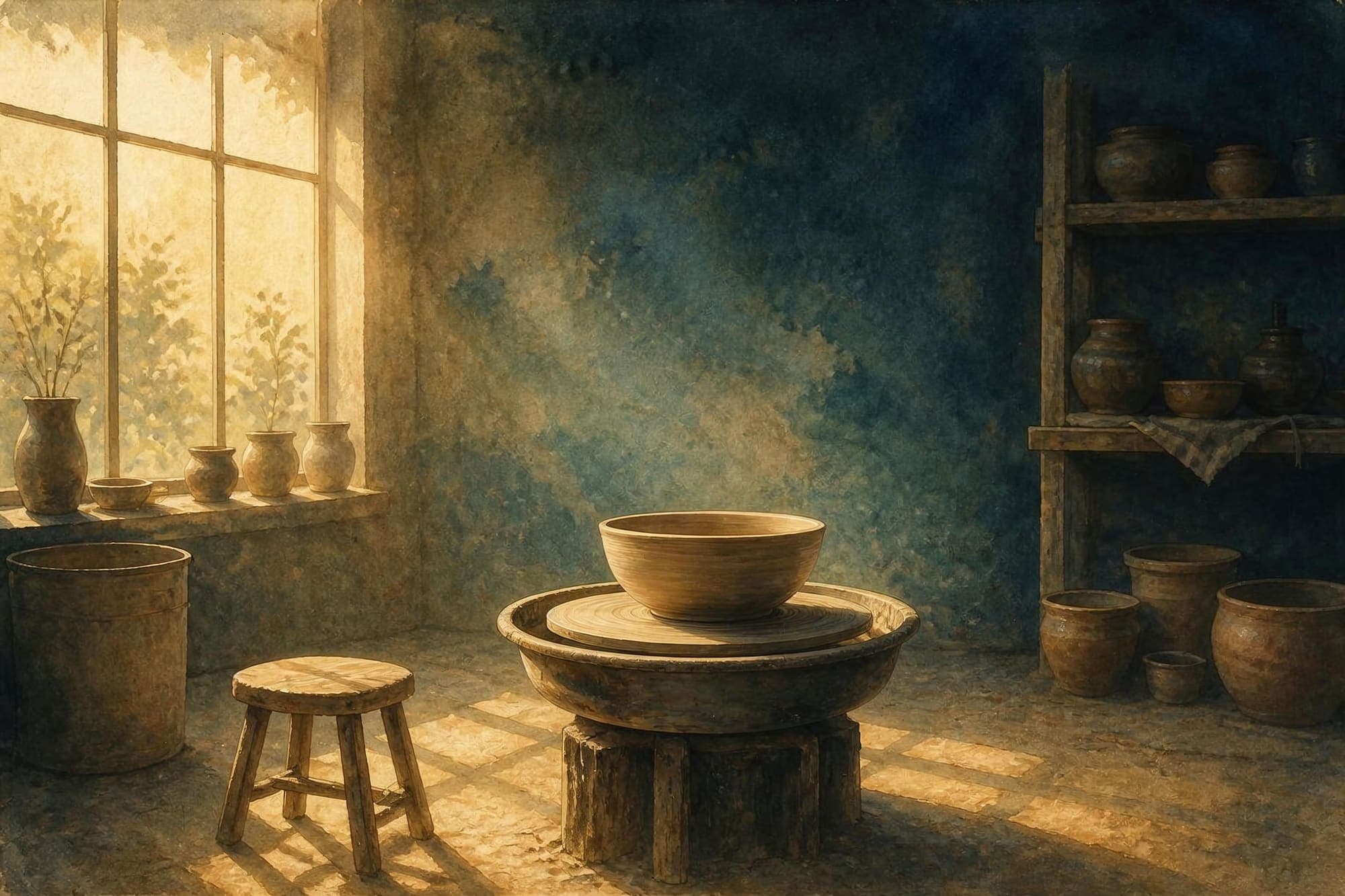
A potter's wheel standing still with a finished bowl, in a workshop in the evening light; the stool beside it is empty
The wheel stands still, the stool is empty: what was set in motion has run out, nothing turns any more.

The goal

The end of the cycle

All the Indian traditions that teach rebirth also teach its end. In yoga it is called mokṣa, liberation, or kaivalya, consciousness being for itself alone. The Chāndogya Upanishad closes its teaching with the words: whoever lives this way reaches the world of Brahman, “and he does not return” (8.15.1). The Gītā says it in the same words: whoever reaches me has no rebirth (8.16).

The end of the cycle is no extinction. What stops is the wandering of the subtle body from one body to the next, because there is no karma left to drive it. What remains is what never wandered: the self the Gītā describes as “never born, never dying, not having become and not becoming, unborn, eternal, constant, primeval” (2.20). Whoever has recognised this lives their life to its end, as the arrow flies to its end, and is not born again, because they never were the one who was born.

The Karma article holds the image of the potter's wheel still turning: the potter has taken the hands away, yet the momentum carries the wheel on until what was set in motion has run out. Here the momentum is spent. The wheel stands still, the bowl is finished, the stool is empty. No new push comes, because nobody wants anything any more. That is the end of the cycle: not a breaking off, but a fading out.

Whether you take that literally or as an image: the direction is the same. Not wanting to live more, not wanting to live differently, but recognising what is already there in every life.

What was never born cannot die.

Would you like to experience what remains for yourself?

On the mat, in the breath and in singing you practise letting go of what passes and staying with what does not wander. That is how reading becomes experiencing.